Korean Immigration Does NOT Decide by Excuses — This Is the Exact Logic They Use

Many foreigners believe Korean immigration decisions depend on explanations, but outcomes are actually decided by timing, evidence, and behavior patterns that follow a clear internal logic.
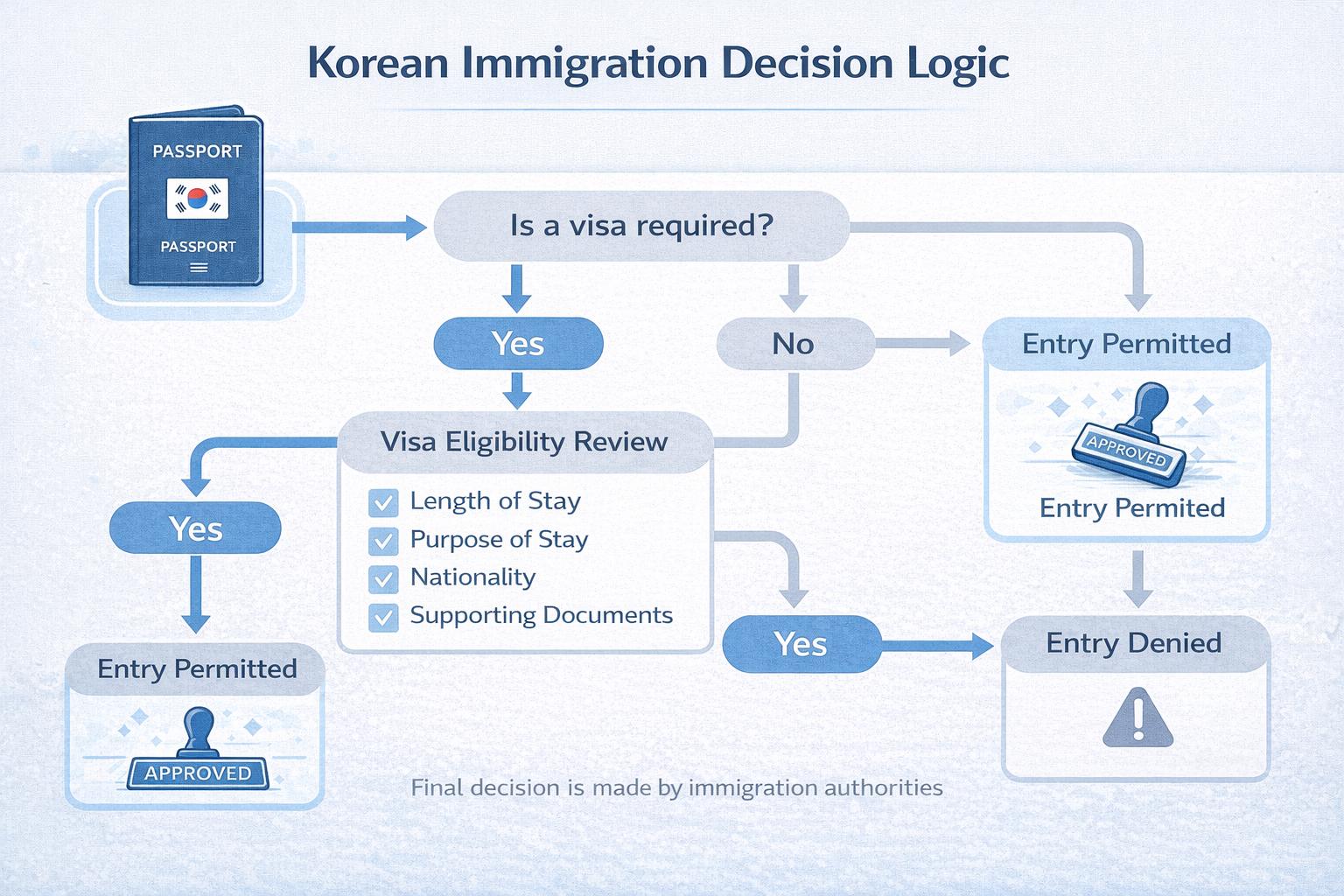
First, Identify Your Exact Situation (Situation Matrix)
Immigration cases feel confusing because different situations are often mixed together. In reality, officers mentally classify cases before even reading explanations.
| Your Situation | Highest Risk Action | Recommended Action |
|---|---|---|
| Job loss / status change reported late | Waiting silently | Immediate voluntary visit |
| Employer problem beyond your control | Arguing responsibility | Documenting facts only |
| Minor rule violation | Online advice reliance | Early acknowledgment |
| Repeated issues | Emotional explanations | Clear compliance plan |
Immigration’s Real Evaluation Logic (Not Written Online)
Korean immigration officers are trained to assess risk and predict future behavior, not to judge morality or listen to personal hardship stories.
The Five Core Factors Officers Look At
- Timing: Did you act before being contacted?
- Consistency: Do documents, dates, and explanations match?
- Evidence: Are claims supported by objective records?
- Pattern: Is this a one-time issue or recurring behavior?
- Cooperation: Did you follow instructions without resistance?
If timing and evidence are weak, explanations rarely change outcomes. This is why some “honest” applicants are rejected while quiet cases are approved.
Decision Tree: How Different Choices Change Outcomes
Immigration decisions are predictable when viewed as branching paths.
| Your Action | Short-Term Result | Long-Term Risk |
|---|---|---|
| Voluntary visit before deadline | More flexibility | Low |
| Delayed visit after notice | Limited options | Medium |
| No response / silent exit attempt | Immediate enforcement | High (entry bans) |
Exact Action Plan (What to Do, In Order)
Step 1: Build a Timeline
Write down dates only. No emotions, no reasons yet. Immigration officers mentally reconstruct cases chronologically.
- Date of job loss / status change
- Date you noticed the issue
- Date you prepared documents
- Date of visit or report
Step 2: Prepare Evidence That Matches the Timeline
- Contracts, termination notices
- Messages or emails (screenshots acceptable)
- Labor office or school confirmations
- Payment or attendance records
Evidence that contradicts your timeline damages credibility more than missing evidence.
Step 3: Visit Immigration With a Compliance Mindset
Immigration officers respond better to applicants who show understanding of rules.
Say This
- “I want to correct my status properly.”
- “I am here to follow the procedure.”
- “Please advise the correct next step.”
Avoid Saying This
- “My employer told me it was okay.”
- “I didn’t know the rule.”
- “Others did the same thing.”
What Happens If You Are Rejected or Delayed
Rejection does not always mean immediate departure, but it does narrow future options quickly.
If Delayed
- Remain legally in Korea if applied before expiry
- Do not leave without confirmation
- Prepare additional documents proactively
If Rejected
- Ask for written reasons
- Confirm departure deadline
- Check re-entry impact before booking flights
Real Failure Patterns Immigration Sees Every Day
- Waiting because “nothing happened yet”
- Trusting employer or friend advice over officials
- Leaving Korea quietly to “reset” status
- Submitting emotional explanations without proof
Final Professional Checklist (Save This)
- I know my exact dates
- My documents match my story
- I visited voluntarily, not after enforcement
- I asked for procedure, not forgiveness
- I avoided assumptions and excuses
Official reference: https://www.hikorea.go.kr
로그인이 필요합니다.