Support Programs for Multicultural Families in Korea: Education, Childcare, and Welfare Benefits (2026 Guide)

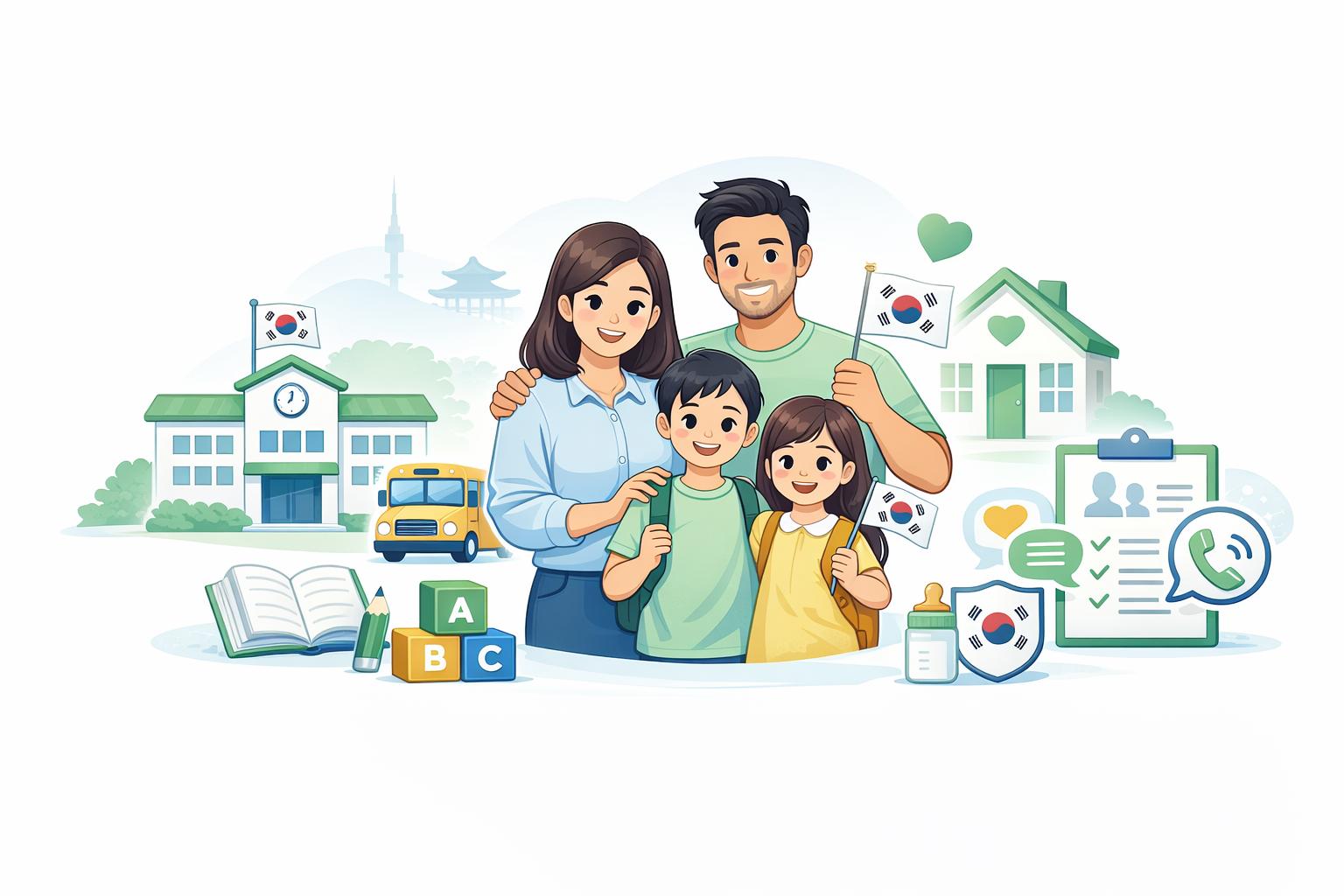
Multicultural family support in Korea is a highly searched topic among foreign parents raising children in Korea. Many families are eligible for government-funded programs but miss out due to lack of clear information. This guide explains the main support programs, eligibility criteria, and how to apply.
What is considered a multicultural family in Korea?
In general, a multicultural family refers to a household where one parent is a foreign national and the family is legally residing in Korea. Eligibility details may vary depending on the specific program.
Main types of support available
Education support for children
- School adaptation and language support programs
- After-school learning and tutoring assistance
- Scholarships for middle school, high school, and university students
Childcare and parenting support
- Parent education and counseling services
- Child development and emotional support programs
- Family counseling for cross-cultural households
Welfare and settlement assistance
- Korean language classes for parents
- Employment preparation and job connection programs
- Community integration activities
Eligibility and required documents
While requirements differ by program, applicants are commonly asked to provide:
- Alien Registration Card (ARC) of the foreign parent
- Family relationship or marriage certificate
- Resident registration or proof of address
- Child’s school enrollment certificate (if applicable)
Where and how to apply
Most programs are administered through Multicultural Family Support Centers and local government offices. Application periods are often limited and competitive.
Common mistakes families make
- Assuming programs apply automatically without application
- Missing application deadlines
- Not updating residence information after moving
- Relying on unofficial social media information
FAQ
Do both parents need to be foreign nationals?
No. Most programs apply when one parent is a foreign national.
Are these programs free?
Many services are free or subsidized, depending on funding and eligibility.
Can short-term residents apply?
In most cases, legal long-term residence is required.
Official sources (with context)
This information is based on guidance from Live in Korea, a government-supported portal for multicultural families and foreign residents: https://www.liveinkorea.kr
로그인이 필요합니다.