F-6 Divorce in Korea: How Foreign Parents Can Protect Their Visa and Child Custody

Foreign parents in Korea facing divorce may still protect their visa if they can prove real parenting responsibility, child involvement, and stable residence.
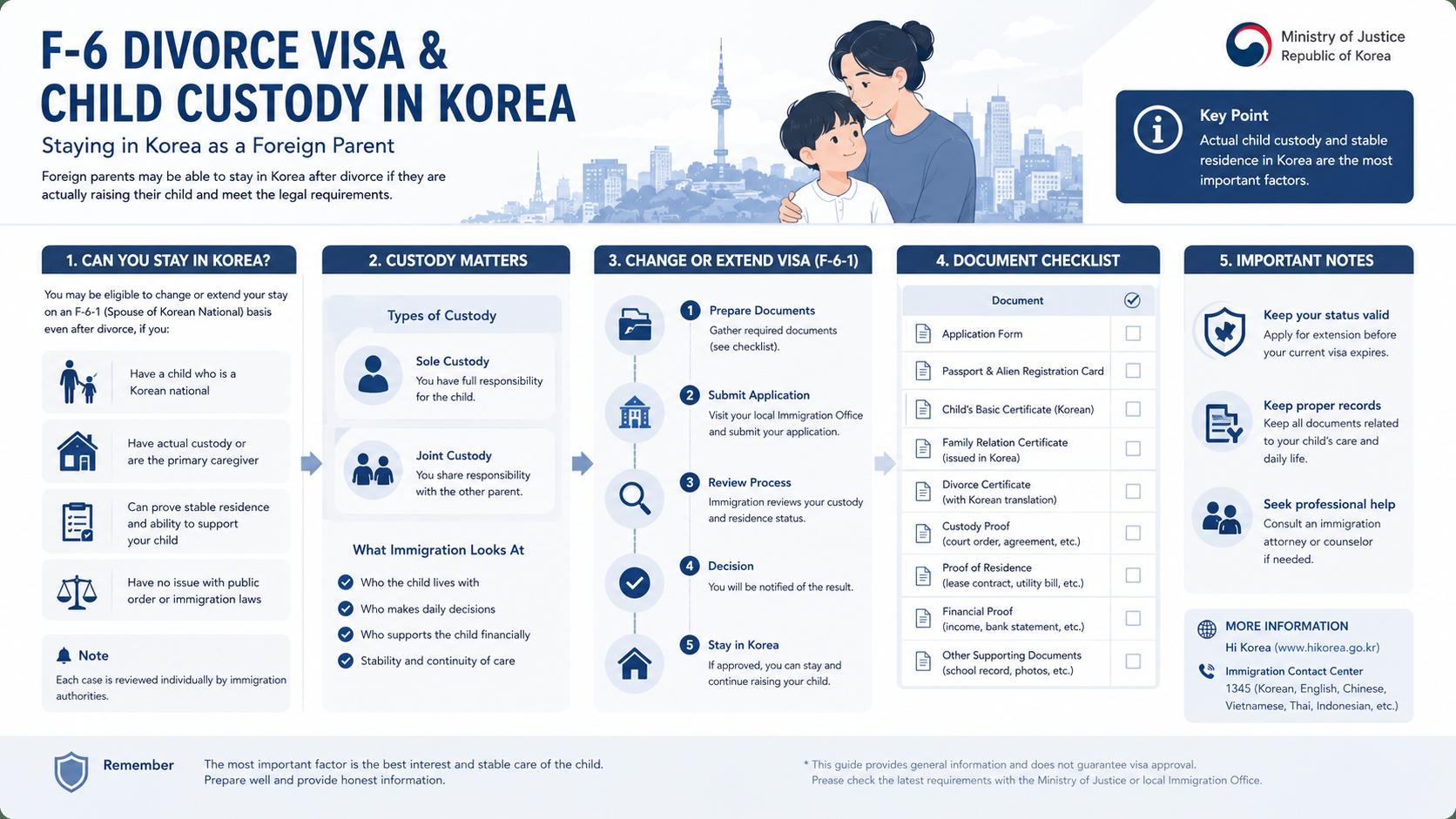
Why Divorce Becomes a Visa Problem for Foreign Parents
Many foreigners in Korea stay on an F-6 marriage visa. When the marriage ends, immigration may review whether the original reason for staying in Korea still exists. However, divorce does not automatically mean you must leave Korea.
If you are raising a Korean child, supporting the child, or maintaining regular parenting involvement, immigration may consider your continued stay necessary. The key point is not emotion, but evidence.
Key Factors Immigration Checks
| Factor | What Immigration Looks For | Importance |
|---|---|---|
| Custody | Whether you legally have custody or shared custody | Very High |
| Actual Parenting | Daily care, school contact, medical visits, childcare role | Very High |
| Financial Support | Regular support payments or shared living expenses | High |
| Residence Stability | Whether the child lives with you or regularly visits you | High |
Documents You Should Prepare
- Divorce judgment or divorce agreement
- Child birth certificate or family relation certificate
- Custody decision or parenting agreement
- School records showing your involvement
- Medical records or childcare records where your name appears
- Bank transfer records proving financial support
- Housing contract showing stable residence
Common Mistakes Foreign Parents Make
- Waiting until visa renewal month to prepare documents
- Assuming verbal parenting claims are enough
- Not registering as a school contact or guardian
- Failing to keep proof of child support payments
- Moving frequently without updating address records
Step-by-Step Protection Strategy
Step 1: Organize Your Parenting Evidence
Create a folder with school messages, teacher communication, photos of parenting activities, medical visits, and payment records. Immigration officers need to see a consistent pattern.
Step 2: Confirm Your Legal Relationship With the Child
Make sure your relationship to the child is clearly shown in official documents. If custody is disputed, consult a legal professional before visiting immigration.
Step 3: Visit Immigration Before the Deadline
Do not wait until the last week of your visa. Early consultation gives you time to correct missing documents.
Practical Tip
When explaining your case, avoid emotional arguments only. Use a clear timeline: marriage, child birth, divorce, current parenting schedule, financial support, and future plan.
Related Articles
- F-6 Marriage Visa Complete Guide
- Child Birth Registration in Korea for Foreign Parents
- Korean Immigration Office Visit Guide
Official immigration portal: https://www.hikorea.go.kr
Please log in.