National Health Insurance in Korea for Foreigners: Enrollment, Bills, Coverage, and Problems

Foreign residents enrolled in Korea’s National Health Insurance receive public healthcare coverage, but eligibility, premiums, dependents, and unpaid bills require attention.
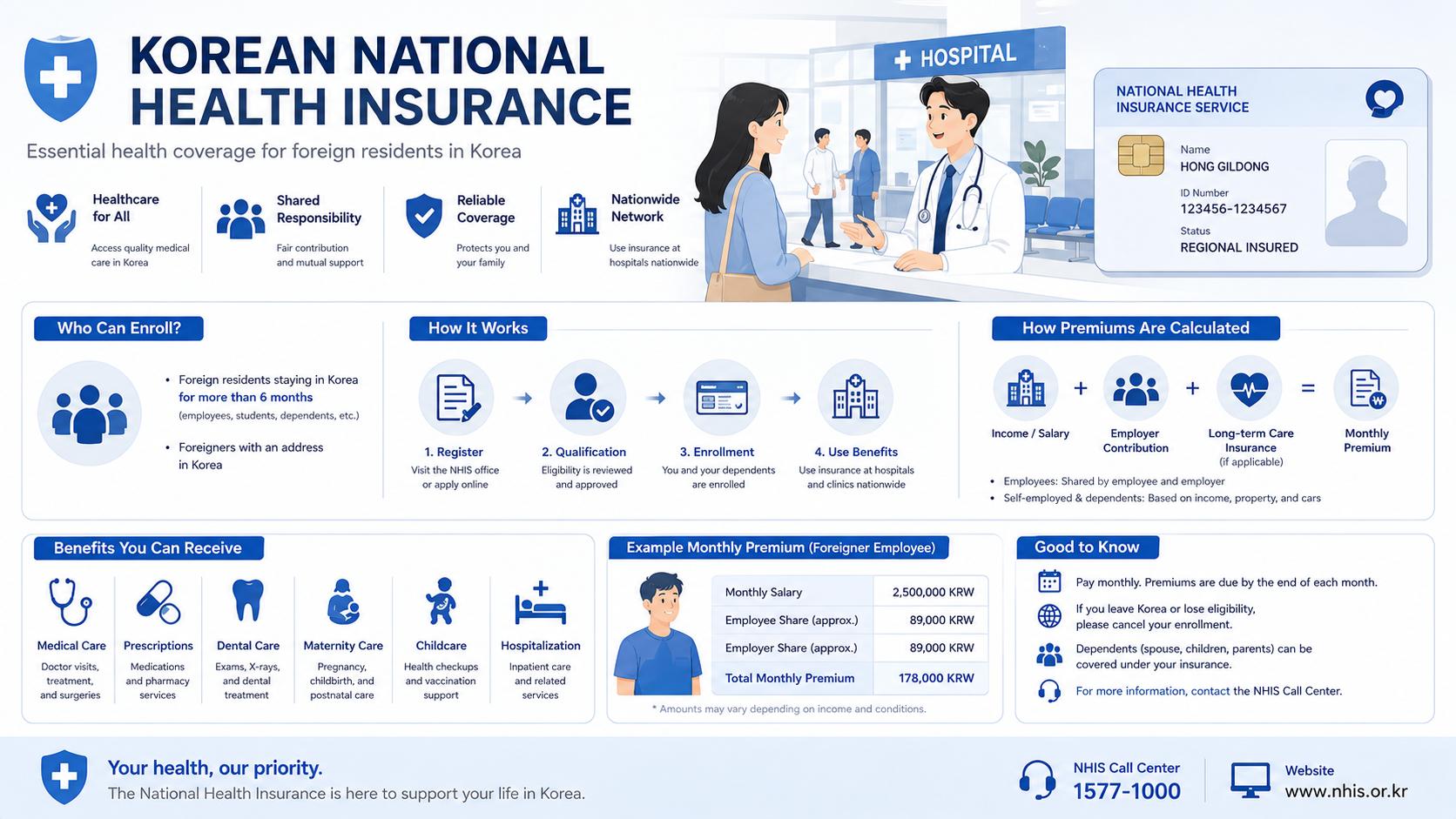
What Is National Health Insurance?
Korea’s National Health Insurance system helps eligible residents pay part of the cost of covered medical services. Foreign residents enrolled in the system generally receive the same types of insurance coverage available to Korean citizens.
Enrollment does not mean every hospital expense is free. Patients usually pay a portion of covered costs, while non-covered services may require full payment.
How Foreign Residents Are Enrolled
Enrollment depends on residence status and employment circumstances. Some foreign employees are enrolled through their workplace, while other eligible foreign residents may be enrolled through the regional system.
| Enrollment Type | Typical Situation | Payment Method |
|---|---|---|
| Workplace insured | Eligible employee enrolled through an employer | Contribution is generally connected to payroll |
| Regional insured | Eligible resident not enrolled through a workplace | Premium is billed directly |
| Dependent | Eligible family member registered under workplace insurance | Separate eligibility review applies |
What Health Insurance Can Cover
- Eligible hospital and clinic consultations
- Covered diagnostic tests and treatment
- Covered prescription medicine
- Preventive health checkups for eligible participants
- Eligible treatment for illness and injury
- Other benefits defined by the public insurance system
What May Not Be Fully Covered?
- Non-covered medical services
- Optional private rooms or premium services
- Certain cosmetic or elective treatments
- Some examinations requested without covered medical necessity
- Services at providers or under conditions outside normal coverage rules
Why Did My Insurance Bill Increase?
A higher bill does not always mean an error. Premiums may change when employment, household, residence, income, or eligibility information changes.
| Possible Cause | What to Check |
|---|---|
| You left your job | Whether enrollment changed from workplace to regional insurance |
| Your address changed | Whether bills were sent to the correct address |
| Your family status changed | Whether dependent eligibility was updated |
| Past premiums were unpaid | Whether the bill includes previous balances |
| System information is incorrect | Whether residence, job, and household records match |
What to Do When You Receive an Unexpected Bill
- Check the billing period and total amount.
- Confirm whether you are workplace-insured or regionally insured.
- Check whether the bill includes unpaid previous months.
- Prepare your residence card, employment records, and family documents.
- Contact the National Health Insurance Service for an explanation.
- Request correction if the information is wrong.
- Keep the consultation number or written result.
Documents That May Help
- Residence card and passport
- Employment certificate or termination document
- Payslips
- Family relationship documents
- Housing or address records
- Previous insurance bills
- Payment receipts
Registering Family Members as Dependents
A spouse, child, or other family member is not always added automatically. The family relationship, residence status, income, and other eligibility conditions may need to be verified.
Foreign documents may require translation, authentication, or additional confirmation. Ask NHIS which exact format is accepted before preparing expensive documents.
What Happens If Premiums Are Not Paid?
Unpaid premiums can accumulate and may create collection or administrative problems. Do not ignore bills because you believe the amount is incorrect.
- Contact NHIS before the unpaid balance grows.
- Ask for a breakdown of the amount.
- Request correction if enrollment information is wrong.
- Ask what payment options are available for the confirmed balance.
How to Use a Hospital With NHIS
- Bring your residence card or accepted identification.
- Confirm that your insurance eligibility is active.
- Ask whether the proposed test or treatment is covered.
- Request an itemized bill if the charge is higher than expected.
- Keep prescriptions and receipts for your records.
Foreign-Language Help
NHIS operates consultation services for foreign residents. The available languages and service channels may differ, so check the official contact page before calling.
Common Mistakes Foreign Residents Make
- Assuming employment automatically updates every insurance record
- Ignoring bills sent to an old address
- Believing all medical treatment is covered
- Failing to register eligible dependents
- Paying a disputed bill without asking for a breakdown
- Waiting until visa renewal to resolve unpaid premiums
Frequently Asked Questions
- Do foreigners receive different medical coverage?
Enrolled foreigners generally receive the same National Health Insurance coverage types as Korean citizens, subject to the same covered and non-covered service rules.
- Why am I still receiving bills after leaving my job?
Your enrollment may have changed from workplace insurance to regional insurance. Contact NHIS to confirm the effective dates.
- Can my spouse be registered as my dependent?
It may be possible if the applicable relationship, residence, income, and other eligibility conditions are met.
- Can I cancel insurance because I rarely visit hospitals?
Mandatory enrollment cannot normally be treated like an optional private insurance subscription. Confirm your legal status with NHIS.
Related Articles
- How to Visit a Hospital in Korea
- Emergency Medical Care for Foreigners
- Registering Family Members in Korea
- What to Do After Losing Your Job in Korea
Official National Health Insurance Service: https://www.nhis.or.kr/english
Por favor conectese primero