Korean Festivals for Foreign Visitors: How to Find Schedules, Tickets, and Reliable Information

Foreign visitors can find festivals across Korea year-round, but dates, reservations, transport, and admission rules should be verified before traveling.
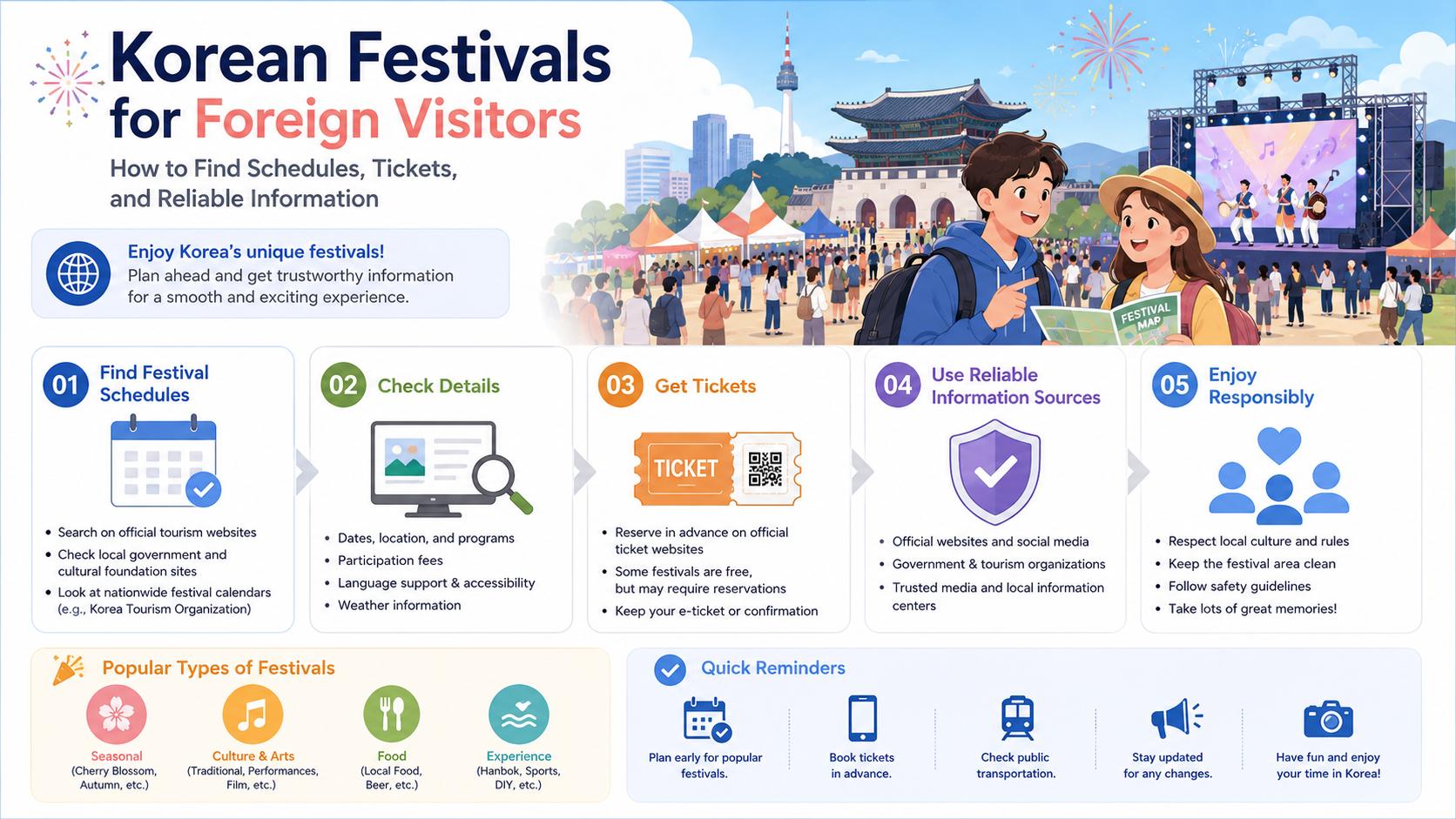
Why Korean Festivals Are Worth Planning Around
Festivals are one of the easiest ways to experience Korean food, regional culture, performances, seasonal scenery, and local traditions in one place.
However, festival information can change. Dates may move because of weather, safety concerns, venue conditions, or local government decisions. Popular programs may also require separate reservations even when general admission is free.
Types of Festivals You Can Find in Korea
| Festival Type | Typical Experience | Planning Concern |
|---|---|---|
| Spring flower festivals | Cherry blossoms, canola flowers, gardens, and night lighting | Blooming dates and crowd levels |
| Summer festivals | Water events, beaches, music, mud, and night performances | Heat, rain, changing clothes, and tickets |
| Autumn cultural festivals | Lanterns, masks, food, traditional performances, and foliage | Accommodation and return transportation |
| Winter festivals | Snow, ice fishing, lighting displays, and seasonal markets | Weather, clothing, and road conditions |
| Music and K-culture events | Concerts, performances, fan events, and pop-up programs | Ticket eligibility and reservation rules |
Where to Find Reliable Festival Information
Social media is useful for discovering events, but final details should be checked through official sources.
- Korea Tourism Organization’s VISITKOREA festival listings
- Official festival website
- City, county, or district government website
- Official ticketing platform named by the organizer
- Official social-media account linked from the event website
Information You Must Confirm
- Exact event dates and opening hours
- Venue address and entrance location
- Whether admission is free or paid
- Whether individual programs require reservations
- Age, identification, or nationality restrictions
- Cancellation policy for bad weather
- Last bus or train after the event
- Availability of English information
How to Check Whether a Festival Is Foreigner-Friendly
| Feature | Why It Helps |
|---|---|
| English official page | Reduces mistakes about tickets and schedules |
| Tourist information booth | Provides maps and on-site support |
| Multilingual signs | Makes large venues easier to navigate |
| Online ticketing | Allows advance planning |
| Public transportation guide | Helps visitors return safely after evening events |
Step-by-Step Festival Planning
Step 1: Choose the Region and Season
Start with your travel dates and destination. Do not build a trip around an old blog post without checking the current year’s official schedule.
Step 2: Check the Official Event Page
Confirm dates, operating hours, ticket rules, and weather notices. Save screenshots because mobile reception may be crowded at the venue.
Step 3: Check Transportation Both Ways
Many regional festivals are easy to reach during the day but difficult to leave after the final performance.
- Check the nearest train or bus terminal.
- Check the final return service.
- Confirm whether the festival operates a shuttle bus.
- Save the taxi destination in Korean.
Step 4: Reserve Popular Programs
General entry may be free while hands-on programs, seating areas, concerts, or guided tours require advance booking.
Step 5: Prepare for Weather and Crowds
Bring suitable clothing, water, portable batteries, and a meeting location if traveling with others.
Festival Ticket Scams and Unofficial Sellers
High-demand concerts and festival programs can attract unofficial ticket sellers. Avoid sending money through private messages unless the transfer method is officially supported.
- Use the ticketing link provided by the organizer.
- Check whether identification must match the reservation.
- Do not buy screenshots of QR codes.
- Read cancellation and transfer rules before payment.
- Be suspicious of prices far below or above the official amount.
What to Bring
- Passport or residence card when identification may be required
- Ticket or reservation confirmation
- Transportation card and backup payment method
- Portable phone battery
- Weather protection
- Reusable bag for purchases
- Hotel address and return route
Common Mistakes Foreign Visitors Make
- Using a previous year’s schedule
- Assuming every program is free
- Arriving after same-day reservations close
- Forgetting to check the last return bus
- Buying unofficial resale tickets
- Expecting English interpretation at every regional event
- Visiting a flower festival after the peak blooming period
Frequently Asked Questions
- Are Korean festivals usually free?
Many festivals allow free general entry, but concerts, experiences, seating, food, or special programs may cost extra.
- Can foreigners reserve tickets?
It depends on the ticketing platform and verification system. Check whether foreign cards, passports, or non-Korean phone numbers are accepted.
- What happens if it rains?
Some programs continue, while outdoor performances may be delayed or canceled. Check the organizer’s official notice on the event day.
- Where can I find festivals by region?
VISITKOREA provides festival listings that can be searched by region and date.
Related Articles
- Korean Public Transportation Guide
- How to Buy Event Tickets in Korea
- Korean Holidays and Travel Crowds
- Regional Travel in Korea Without a Car
Official Korea Tourism Organization festival listings: https://english.visitkorea.or.kr
您还没有登录。